

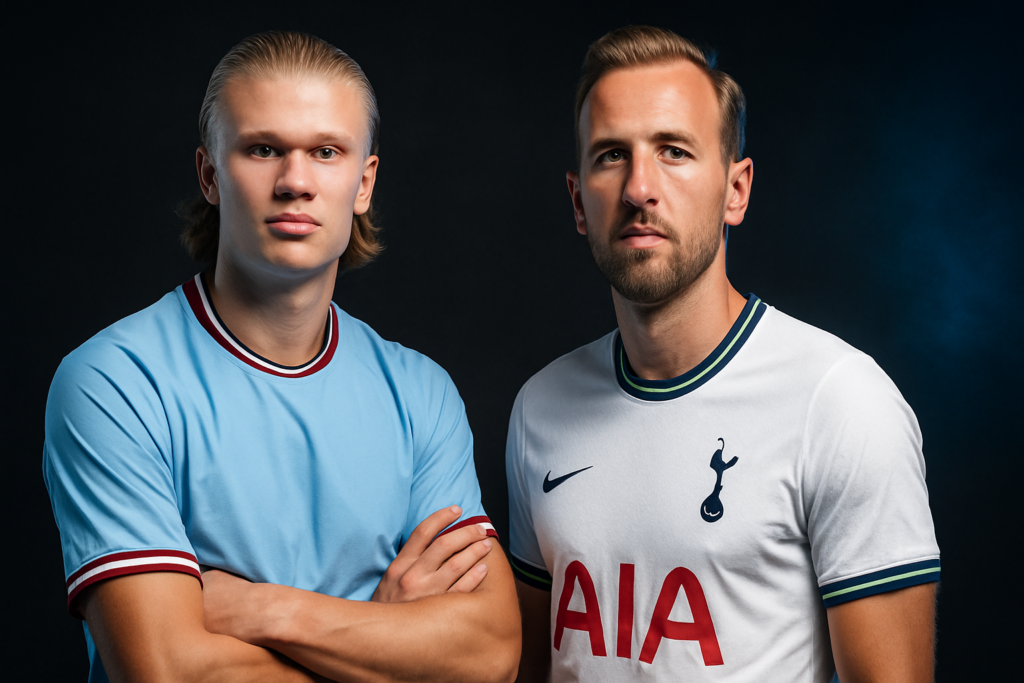
Man City vs Tottenham prediction — why City should win 2–0 (and whether Spurs will score)
Estimated reading time: 4 minutes
Key takeaways
- Manchester City are clear favourites (≈65–70% implied win probability), so a City victory is the baseline.
- Etihad history points to goals and BTTS, but 2026 previews highlighting Spurs’ injuries pull the BTTS probability down.
- My primary prediction is City 2–0; it shifts to 3–1 only if Spurs’ attack is fit and firing.
Here’s the bit everyone’s arguing over: recent Etihad meetings between these two have been proper goal fests with Spurs reliably finding the net, yet the 2026 previews are increasingly comfortable backing a Manchester City clean sheet.
That tension is the whole Man City vs Tottenham prediction story — and it’s why I’m leaning 2–0 to City (3–1 only if Spurs’ attack is actually healthy).
Man City vs Tottenham prediction — the split in expert views
Across previews and tipsters the baseline is the same: Manchester City are the favourites.
Bookmakers and pundits routinely price City as odds‑on, with market snapshots putting them around 4/6, 8/15 or even 9/20 for the win — numbers that imply roughly a 65–70% chance of victory.
Fox Sports and several UK outlets all cluster around a City win in the 1–3 goal margin.
But where experts diverge is about goals. One group leans on the Etihad history and expects a shootout — City 3–1 or 3–2.
The other group points to Tottenham’s recent injuries and wobbling form and makes the case for a City shut‑out: 2–0 or even a HT/FT City–City recommendation.
Both camps have named names and odds to back their view, which is why you see correct‑score grids full of 2–0, 2–1 and 3–1 prices. Ladbrokes and the Racing Post capture that split neatly.
Why the Etihad history argues for goals and BTTS
History is the reason smart money has long loved BTTS in these fixtures.
The last four Premier League meetings at the Etihad produced 21 goals — that’s an average of 5.25 goals per game — and Spurs scored at least twice in each of those away visits.
SportsMole lays out that recent Etihad games have been open and chance‑heavy, the kind of matches where both teams trade blows and keep the scoreboard moving.
So from a strictly historical viewpoint, the safe headline would be: expect goals, expect Spurs to score.
Why 2026 previews are leaning towards a City clean sheet
That historical argument meets immediate reality: a lot of 2026 previews call Spurs’ attack into question.
Multiple outlets have two points they return to: Spurs’ form has been described as “dire” and there are injuries and suspensions cutting into their attacking options.
Those two factors together reduce the confidence in Spurs’ ability to convert the transitional chances that used to haunt City.
That’s why you’re seeing tipsters suggest City to win to nil (the Racing Post lists City win to nil as a best bet) and other previews flag BTTS No at attractive prices.
Goal is among the outlets explicitly linking Spurs’ poor form and personnel issues to the falloff in confidence about them scoring.
Tactical and personnel reality check — which narrative wins?
Break it down and it’s straightforward: City still create chances at will.
Most previews assume their core attacking pieces are available and dangerous.
The Independent’s coverage, for instance, builds props around Erling Haaland scoring and even bagging a brace in some books — that’s how the City‑first narrative stays alive. Independent
On the Spurs side the question is availability.
Several previews explicitly mention “injury and suspension issues” as the reason to downgrade Spurs’ expected output.
If Son, or whoever is the main transitional threat, is missing or limited, Spurs don’t look the same team that used to hit City with two‑goal road trips.
So the tactical truth is conditional:
- If City have their front three firing and Spurs are short on attackers, City control possession and territory and limit high‑value transitions.
- If Spurs arrive near full strength and are willing to press high and counter quickly, the match can revert to the Etihad shootout we’ve seen before.
Prediction model: why 2–0 is my baseline (and when it becomes 3–1)
Let’s put some numbers on this without pretending we’ve got a crystal ball.
Market snapshots put City’s implied win probability in the mid‑60s to 70% range — take the 9/20 pricing as an example and you’re around a 69% implied chance. Fox Sports
Now look at the BTTS market. Some books have BTTS No around 13/8 in these previews, which implies roughly a 38% chance of BTTS being false — i.e., bookmakers giving about a 38% chance both teams do not score, and by inversion roughly 62% that both teams score.
That’s a clean market read, but it sits uneasily against the 2026 narrative that Spurs’ attack is broken.
Weigh both signals and you get this:
- Baseline market synthesis: City win probability ≈ 65–70%.
- Raw BTTS market math (from a 13/8 BTTS No example): BTTS Yes implied ≈ 62%.
- My adjusted view, factoring in the 2026 previews on injuries and form: the chance both teams score looks closer to 45–55% — basically a coin flip leaning slightly to both teams scoring because history argues for it but current form pulls the other way.
That’s why my primary Man City vs Tottenham prediction is City 2–0.
It’s the scoreline that reflects City control, a couple of well‑taken chances (Haaland or De Bruyne), and Spurs failing to convert on the transitions they’d usually rely on.
It becomes 3–1 if Spurs’ main attacking players are confirmed available and sharp.
In that scenario you’re back in the high‑scoring Etihad template — City still win comfortably, but Spurs nick a goal from a counter or set piece and BTTS is very likely.
What that means for the “will Spurs score?” question
If you want a single number: the markets argue BTTS Yes is slightly more likely than not, but 2026 previews have pushed the pure experts’ probability toward BTTS No.
My take after weighing both kinds of evidence is a roughly 50% chance Spurs score at least once.
How I get there, briefly:
- Head‑to‑head history points to a high BTTS frequency.
- Market BTTS pricing (example: BTTS No at 13/8) mathematically suggests BTTS Yes ~62% in isolation.
- Expert reports about injuries and “dire form” pull that back — so I split the difference and call it about 50/50.
If you need a conditional rule for betting or building a fantasy lineup: if Spurs are missing a starter in the final XI who’s usually central to through balls and counters, lean to City 2–0 and treat BTTS as unlikely.
If Spurs’ front line is fit and confirmed, flip to expecting at least one Spurs goal and consider 3–1/3–2 scenarios.
Market angles and how to play them (based on current previews)
Given the split, there are sensible plays for each risk profile.
- Conservative: City moneyline. Market consensus has priced City as the safe outcome (≈65–70% implied win). Racing Post
- Balanced: City 2–0 correct score or City win + BTTS (if you trust historical Etihad goals). Several previews still list 2–1 and 3–1 as popular correct scores.
- Risk‑seeking: City 3–1 / 3–2 or Over 3.5 goals if Spurs’ attack is confirmed fit — that’s playing the historic shootout angle. Ladbrokes previews often build value bet‑builder lines around that case.
- Value anti‑consensus: City to win to nil and Haaland anytime if you believe Spurs’ injuries will blunt them — the Racing Post and Goal previews highlight those as mispriced if Spurs really are weakened. Goal
Player props also show where confidence lies.
The Independent notes Haaland is a common first‑scorer/multi‑goal target in the market — he’s the logical pick if you back City to dominate. Independent
Quick responsible‑gambling note: these previews and odds shift with match‑day team news, so treat any pre‑match play as conditional on final confirmations.
FAQ
Frequently Asked Questions
What is your Man City vs Tottenham prediction?
My baseline Man City vs Tottenham prediction is Manchester City 2–0 Tottenham. That reflects City’s market‑priced superiority (≈65–70% in many snapshots) and the 2026 expert thrust that Spurs’ injuries and poor form reduce their threat.
Will Spurs score in this game?
It’s a coin flip by my read — roughly a 45–55% chance Spurs score at least once. Markets on BTTS (example: BTTS No at 13/8) imply BTTS Yes around 62% in isolation, but recent previews about Spurs’ condition pull that down to about even odds.
When does the match flip to a high‑scoring affair?
If Spurs confirm their main attackers fit and are set to play on the counter, the match flips back to the Etihad pattern — think 3–1 or 3–2. If key Spurs forwards are missing, expect a tighter City 2–0 control game.
Which markets look most attractive given this split?
Two tidy routes: back City 2–0 / City to win to nil if you trust the 2026 narrative; or back City + BTTS / Over 2.5 if you trust Etihad history. Each side of the split has market evidence to support it — the trick is which evidence you weight more heavily.
Who’s the bet to score for City?
Erling Haaland is the logical anytime and multi‑goal pick; many previews and prop lists centre on him in these matchups. If you want a City creativity pick, Kevin De Bruyne is the usual assist/anytime candidate.
Do any trusted outlets back the exact 2–0 scoreline?
Yes — several 2026 previews, including the Racing Post and Goal betting tips, explicitly feature 2–0 as a recommended scoreline or best‑bet scenario based on Spurs’ form and absences.
Conclusion — the one thing to remember
Both the Etihad history and the 2026 previews have credible cases, but weighing market odds, recent expert sentiment and personnel realities pushes me to a straight Man City vs Tottenham prediction of City 2–0 as the most likely outcome; move to 3–1 only if Spurs’ attack is confirmed fit and sharp.
If you want a single number to chew on: treat Spurs scoring as roughly a coin flip — history says yes, current form says maybe not.