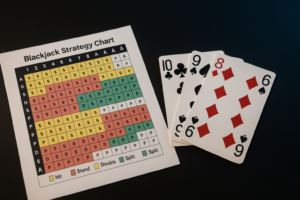


Is sports betting more profitable than card games? A clear-eyed look from someone who's watched both sides
Ask two gamblers in a pub—one who grinds poker cash games and another who models lines for NFL bets—and you'll get two confident answers. But here's why the real answer is nuanced: profitability in gambling isn't about the product itself so much as the player's skill, the market you're facing, and how disciplined you are.
I'll walk you through what the numbers say, why poker and some card-play strategies often give sharper edges, where sports bettors can still find money, and practical ways to think about bankrolls and risk. If you've been following this conversation, you'll know there are stark contrasts in margin structure, opponent quality, and harm profile that matter for anyone trying to make a living—or just win more often—playing games for money.
Head-to-head: what the numbers actually show
Let's start with a concrete experiment because numbers cut through a lot of hype.
- A year-long head-to-head experiment that tracked poker cash games against sports betting reported poker netting $4,524 with an ROI of 58.4% and an average hourly profit of $10.70. The same study showed sports betting netting $1,840, ROI 36.8%, and hourly profit $7.40. You can read the full write-up of their 365-day project here: 365-day poker vs sports betting experiment.
- Here's the interesting part: the authors concluded that “poker was nearly 2.5 times more profitable than sports betting over the year,” largely because poker lets skilled players exploit weaker opponents in cash games.
- Industry commentary backs that up: a lot of skilled sports bettors who consistently win are operating within small percentage edges—hitting around 55–57% on standard -110 bets, which translates to roughly 3–5% ROI long-term. That’s considered very good in the world of sports betting.
So the short numerical takeaway: in controlled comparisons, and for skilled players, poker has shown higher hourly returns and ROI than typical sports betting. But numbers only tell part of the story—you also need to understand why.
Why poker and certain card games can be more profitable
Poker isn't just luck; it's an information game where you can extract an edge repeatedly from weaker players.
- In poker cash games, you face an opponent pool that includes recreational players making mistakes. That creates a structural, repeatable advantage for players who invest in learning and table selection.
- The casino take (rake) in many poker games is often a smaller drag on profitability than the vigorish (vig) sportsbooks charge on standard bets (more on that below).
- Poker gives fast feedback. When you study a hand or change a strategy, you can test it quickly across many hands and sessions. That accelerates learning and compounding of small edges into meaningful profits.
Advantage play in some card games, like card counting in blackjack, can also produce positive expectation. But there’s a big qualifier: casinos fight advantage players aggressively with heat, rule changes, and restricted access, which makes scaling those methods difficult.
Put simply: poker scales with volume and superior opponents. If you can consistently sit in soft games and avoid high-rake tables, a skilled player can earn significantly more per hour than a typical sports bettor.
Why sports betting is a different animal—and where profits really live
Sports betting is huge and efficient. That matters because efficiency eats easy edges.
Market size and sophistication
The global sports betting market is not a niche hobby—it's a massive industry. Estimates place market size around USD 100–110 billion in 2024, with projections well into the hundreds of billions within a decade. The online segment alone was roughly USD 70.3 billion in 2024 and is growing quickly. See an overview of market estimates here: global sports betting market report.
That scale brings deep liquidity, sophisticated risk models, and professional traders. In practice, that means the betting lines you see—especially for top leagues—are efficient and hard to beat consistently.
Structural margin: the vig
Sportsbooks build profit into prices. A standard -110 line implies a break-even win rate around 52.4%. Hitting 55–57% is already outstanding and only yields low-single-digit ROIs.
This matters because unlike poker—where your opponent can be a clear source of edge—sports bettors are competing against bookmakers and a market full of sharp participants. There are no consistently weak opponents in the line itself.
Where sharp bettors find room
All that data and competition hasn't eliminated opportunity; it's changed where it exists. Profitable angles today often include:
- Early lines before books adjust to new public and sharp information.
- Niche markets—lower-division leagues, obscure props, or international fixtures with lower liquidity where lines are less scrutinized.
- In-play betting, where latency and model differences can create temporary mispricings.
- Promotion exploitation (bonus shopping, reduced vig offers, exchanges, and matched-betting opportunities) that can temporarily boost expected return for recreational players.
If you want to dig deeper into how bettors hunt edges today, this article on the poker vs sports-betting skill dynamic is a useful read: poker vs sports betting overview.
Risk, harm and the human cost
Profitability discussions can't ignore harm. Different formats carry different risk profiles, and the most-profitable-looking paths can also be the most psychologically taxing.
- A review of gambling product risk in Great Britain found that electronic gaming machines (EGMs) show the highest association with harm, but both sports betting and poker have elevated risk markers. The report is clear that some forms of betting are linked to high problem-gambling prevalence: GambleAware product risk review.
- For example, in-person non-football sports betting showed around 71% experiencing any problems and 36% meeting a “problem gambling” threshold in one breakdown, while poker shows high odds-ratios for problem gambling in other surveys.
- International surveys report odds-ratios for problem gambling of about 5.3–10.7 for sports betting and 11.7 for poker, indicating both are higher-risk activities compared with lotteries or some other formats.
This matters because the drive for profit—especially in low-margin sports betting where variance is high—can encourage chasing losses, increasing stakes prematurely, or putting bankrolls at risk. Responsible gambling practices are not optional; they're part of being a long-term, rational player.
Practical playbook: how to approach each if you're serious
I won't pretend there's a one-size-fits-all roadmap. But here's how the priorities differ depending on the path you pick.
Poker cash-game grinder
- Priorities: table selection, bankroll health, continuous study, and avoiding high-rake games.
- Scaling: you scale by moving up stakes or adding volume, assuming you keep winning at a given level and avoid games where opponents are equally skilled.
- Typical results: in the experiment above, the poker grinder made more money per hour than the sports bettor—if you can replicate that in soft games, poker tends to deliver cleaner, repeatable edges.
- Hazards: tilt, variance across sessions, and the need to constantly find softer games as you get better.
Sports bettor
- Priorities: accurate models, line-shopping across books, bankroll discipline, and exploiting promos or reduced-vig opportunities.
- Scaling: more difficult—your edge is typically a small percent of stake, so you need bigger volume and many accounts or higher limits to materially increase earnings.
- Typical returns: a successful pro often operates in the low-single-digit ROI range on standard sides and totals, making risk management crucial.
- Hazards: public variance (long losing stretches even with an edge), market efficiency, and bookmaker limits or account restrictions.
Across both paths, stake sizing matters. Sports bettors often use flat stakes or fractional Kelly to protect a small edge, while poker players must manage buy-ins, table selection, and mental game to convert edge into cash.
Betting angles and market signals worth watching
If you're leaning toward sports betting, watch these practical signals—this is where you see lines move and where profits sometimes appear:
- Early number value: take advantage of early lines that haven't yet absorbed all public and sharp information.
- Injury and lineup news: late-breaking information can move markets; being faster or more connected helps.
- Sharp action: heavy unbalanced money from respected professionals often moves lines; following where the pros bet can be instructive.
- Niche liquidity gaps: smaller markets and props are less efficient; they reward research and specialization.
- Promotions and exchanges: sometimes a bookmaker's bonus or reduced vig on a particular market improves expected value materially—play these responsibly and account for turnover requirements.
Remember: always factor in the vig and limits. Sportsbooks will reduce your margin (or your access) if you consistently beat them.
FAQ
1. Which is more profitable for an average recreational player: sports betting or poker?
For most recreational players, neither option guarantees profit—both carry risk. However, the evidence suggests that a recreational player who invests time to learn poker fundamentals and practices good table selection is more likely to realize a clearer, repeatable edge in poker cash games than in standard sports betting, where lines are considerably more efficient.
2. Can you make a living from sports betting?
Yes, but it's rare and typically involves operating at scale, excellent modeling, disciplined bankroll management, and the ability to find and exploit small edges repeatedly. Realistic ROI on common markets is low-single-digit percentages, so you need large turnover or higher stakes to generate substantial income.
3. Is card counting in blackjack a practical way to profit today?
Card counting can create a small positive expectation in ideal conditions (often around 0.5–1.5%), but casinos actively counter it through dealer shuffling, deck penetration rules, and banning suspected counters. Scaling and sustaining card counting profits is difficult in modern casino environments.
4. Which format has higher problem-gambling risk?
Both poker and sports betting are associated with elevated problem-gambling indicators. Some surveys show poker with high odds-ratios for problem gambling; others point to sports betting's accessibility and marketing as amplifying harm. Responsible limits, self-exclusion tools, and monitoring are essential regardless of the format.
5. What about promos—do they make sports betting more profitable?
Promotions can temporarily tilt EV in your favor—free bets, matched-betting opportunities, reduced vig, or sign-up bonuses can all boost returns. The catch: many promos come with turnover or withdrawal conditions, and markets normalize quickly; promos are a tactical advantage, not a long-term business model by themselves.
6. How should I size my bankroll in each format?
Poker bankrolls depend on win-rate and table stakes (many grinders use multiples of buy-ins to avoid variance). Sports bettors should size stakes conservatively—flat betting or a fractional Kelly approach is common when edges are small. The key is preserving capital through downswings and avoiding stake escalation after losses.
7. If I'm starting, which should I learn first?
Choose based on what you're willing to study and tolerate emotionally. Poker rewards study and offers quicker feedback loops. Sports betting needs statistical modeling, data gathering, and patience for long variance. Both require bankroll discipline and responsible play.
8. Are there hybrid paths that combine both?
Yes—many professional returns operators combine sports trading with poker or casino advantage play. Some bettors use sportsbook promos to fund poker roll or vice versa. Whatever the mix, maintain strict bankroll and risk rules and be mindful of the regulatory and account-risk implications.
Conclusion: the real answer (and what to do with it)
So, is sports betting more profitable than card games? The short, honest answer is no—not inherently. The long answer is more useful: for a disciplined, skilled player, poker and selective card-game advantage play usually offer cleaner, larger, and more repeatable edges than standard sports betting. The 365-day experiment that tracked both showed poker generating higher ROI and hourly profit, and expert commentary confirms that sports bettors live on much smaller margins—when they win at all.
That said, sports betting remains a massive, dynamic industry with niches and promotional angles where savvy bettors can make money. The product's size has made lines more efficient, so profits—where they exist—tend to be smaller and require scale, technological sophistication, or timing to exploit.
What matters is your temperament, time, and risk tolerance. If you like direct competition and fast feedback and can find soft games, poker may be the better route. If you prefer prediction markets, data, and less face-to-face pressure, sports betting offers variety and opportunity—just expect smaller percentage edges and the need for strict discipline.
Finally, whatever you do: play responsibly. Set limits, track results, avoid chasing losses, and use available support tools if gambling starts to feel harmful. If you're curious, read more about the study comparisons here: 365-day poker vs sports betting experiment, the broader poker vs sports-betting discussion at PokerTube, and industry context on market size at Grand View Research. For product-specific harm data and guidance, see the GambleAware review.