
Belgium 0–0 Iran at the 2026 World Cup: What the draw really means — tactical, betting and group takeaways
Here’s the interesting part: a match that many expected to be a routine Belgian victory turned into a gritty, scoreless draw that suddenly reshaped Group G and produced a handful of betting lessons you want to know about. Belgium and Iran met for the first time at the 2026 World Cup at SoFi Stadium in Inglewood on 21 June 2026, and the scoreboard read 0–0 after 90 minutes. Iran’s goalkeeper Alireza Beiranvand made seven saves and was the standout performer, while Belgium finished with 10 men after Nathan Ngoy was shown a red card in the second half.
This piece walks you through what happened on the pitch, why it matters for qualification, how markets likely reacted (and how bettors should think about future plays), and practical notes on discipline, fatigue and tactics that will shape the rest of Group G. I’ll keep it conversational and practical — like a chat over coffee about the angles you’d want on your radar.
Match snapshot: the facts that set the context
Quick summary you can refer back to:
- Competition / stage: 2026 FIFA World Cup, Group G fixture.
- Venue & date: SoFi Stadium, Inglewood — 21 June 2026 (kick‑off local time 12:00). See the stadium event page for details: SoFi Stadium — Belgium v Iran.
- Attendance: 70,317.
- Final score: Belgium 0–0 Iran. Official recaps: FIFA match report and live coverage: FOX Sports live blog.
- Key incidents: Alireza Beiranvand made seven saves; Thibaut Courtois made three. Nathan Ngoy (Belgium) received a second‑half red card.
- Head‑to‑head: This was the first-ever meeting between Belgium and Iran in international competition (per Group G records: Group G summary).
How the game played out — tactical highlights
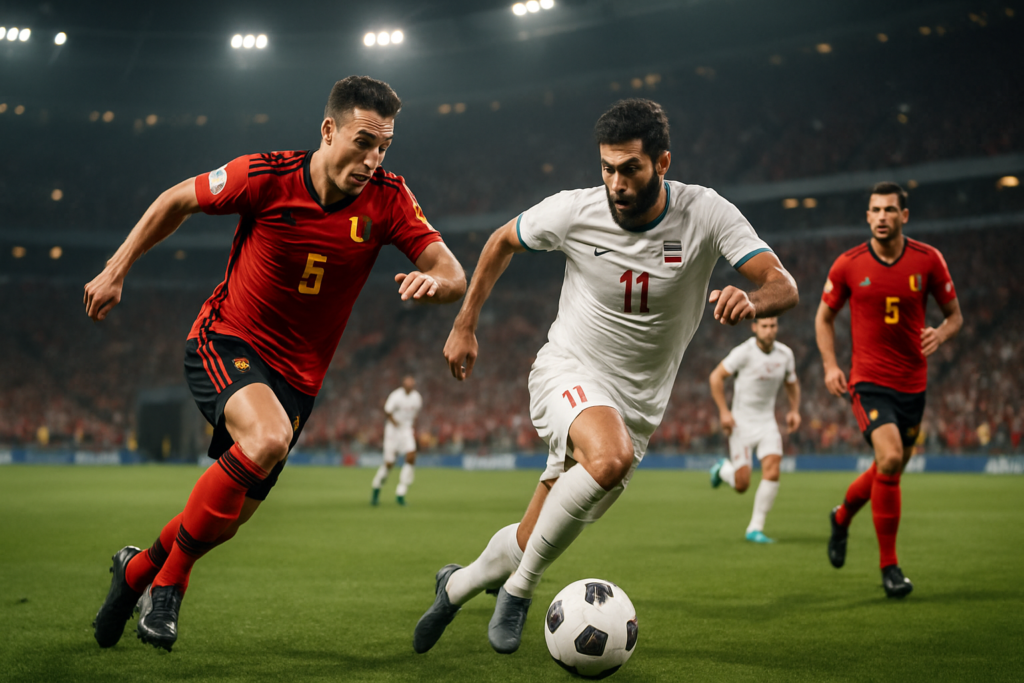
If you watched it, you felt the grind. Belgium had more of the ball and more attempts, but they couldn’t find the cutting pass or finish; Iran sat compact and invited pressure, then relied on fast transitions and Beiranvand’s goalkeeping to keep the clean sheet. Both FIFA’s match report and FOX’s recap emphasize that it was a grueling, goalkeeper‑decided contest.
This matters because the shape Iran deployed — a disciplined low block with quick counters — neutralized Belgium’s usual routes to goal. Belgium’s attacking players created passages of possession but not enough clear chances, and that inefficiency became more costly after the red card.
- Belgium: Favorite on paper, controlled phases but lacked a consistent way to break the defensive line. Romelu Lukaku remains central to their attacking plan (he forced an own goal in the previous match against Egypt), but against Iran his impact was limited by the compact defending and an inability to sustain high‑quality chances.
- Iran: Defended with structure, relied on counter moments, and got maximum punishment from Beiranvand’s performance. Coach Amir Ghalenoei called it a “beautiful game” under the “worst possible conditions,” a line he used to describe the squad’s off‑field pressures and logistics prior to the match (source: ESPN).
Key moments that swung the narrative
There were a few turning points worth bookmarking:
- Beiranvand’s saves: Seven saves is an elite performance at any level. When your keeper keeps you in the game like that, it changes the conversation from “how did Belgium not score?” to “how did Iran hold on?” (match details: FOX Sports).
- Ngoy’s red card: The dismissal late in the second half fundamentally reshaped the final stages. Belgium were playing for a winner and suddenly had to reconfigure; that reduces their expected chance output and increases the probability of a draw in live markets.
- Psychology & momentum: Iran’s players embraced an underdog mentality — Ghalenoei’s comments about adversity and “beautiful” performance weren’t just media fluff; they reflected a team spirit often undervalued in raw pre‑match models.
Where this leaves Group G — standings and implications
Group G (Belgium, Egypt, Iran, New Zealand) suddenly looks less straightforward. After two rounds:
- Iran: Two draws (2–2 vs New Zealand; 0–0 vs Belgium). Two points, goal difference 0, and in a strong position to challenge for qualification if they can secure a result in the final group game.
- Belgium: Two draws (1–1 v Egypt; 0–0 v Iran). Two points, but pressure mounting on a seeded team that hasn’t won yet.
This matters because the final round of group games will be scenario‑driven. If Egypt vs New Zealand produces a winner, that immediately re‑shapes motivation for both Belgium and Iran. From a betting perspective, markets will start to price conditional outcomes — for example, whether Belgium must chase a win and open up defensively, or whether Iran can approach the last match content with a defensive plan and counter strategy.
For a running table and fixtures context, see the Group G summary: 2026 World Cup Group G (Wikipedia).
What this means for Belgium — concerns, questions, and tactical fixes
Belgium’s campaign is at a crossroads. They arrived as favorites but have two draws from two, and that paints two immediate concerns:
- Attacking bluntness: They’ve scored just two goals in two games, one of which was an own goal forced by Lukaku’s presence as a sub against Egypt. The team has star names but not consistent incisiveness.
- Defensive disruption: Ngoy’s red card adds suspension headaches for the next match and forces the coaching staff to pick between reshuffling the backline or altering the formation. Either option can change Belgium’s risk profile.
Coaches often respond to this by either simplifying the attack (get the ball to the big target more) or changing the personnel to a slightly more direct approach. For bettors, the key is watching both the lineup announcements and the manager’s pre-match language — if a coach talks about “we must win” and selects a more attacking XI, expect over/BTTS markets to move accordingly. If they pick a conservative lineup, Belgium’s implied probability of a win may be overstated in some books and offer value on shareable hedges like draw/Belgium double chance.
What this means for Iran — belief, but watch the fatigue factor
Iran’s confidence is rightly boosted. Holding Belgium — a seeded side — and collecting two draws is a great base for qualification. Alireza Beiranvand re‑established himself as a tournament difference‑maker with those seven saves, and coach Ghalenoei’s message that the team produced a “beautiful game” under “worst possible conditions” suggests a group galvanized rather than defeated by adversity (ESPN coverage: read more).
That said, Iran’s off‑field story is important: logistical headaches (reports of travel to Mexico rather than a preferred training base in Tucson, plus reports of officials being barred) create real fatigue and potential volatility in performance across the tournament (ABC News report).
From a betting angle, that creates both a defensive value and a cautionary flag. On one hand, Iran's disciplined low block and elite goalkeeping can make them great value on unders, Asian handicap +0.5/ +1.0 in matches where they are underdogs, and in “to advance” markets if books still underprice them. On the other hand, fatigue and off‑field pressure can cause form drops; so position sizing and in‑play monitoring are essential.
Betting markets & practical angles — how bookmakers and traders likely reacted
I don’t have a tick‑by‑tick odds archive here, but we can lay out what typical market behaviour would be and why that matters for bettors:
Pre‑match pricing expectations (inference)
- Belgium would have been the clear favourites in pre‑match markets; Iran the long shot; draw a mid price. That’s standard when a European seed meets an AFC side.
- Smart bettors may have been wary before kick‑off, given Belgium’s 1–1 vs Egypt and Iran’s spirited 2–2 vs New Zealand. Professional books would have priced Belgium short but monitored early market money.
In‑play and immediate reactions
- When Beiranvand was active and Iran weathered first-half pressure, live prices for a Belgium win would drift, and the draw market would shorten.
- Ngoy’s red card pushed Belgium’s win probability down sharply in running markets and probably opened up value on Iran to win late or on the draw holding. That’s textbook live book behaviour when a favorite drops to ten men.
- After the final whistle, expectation is that books nudged Belgium’s outright/group‑winner prices down and tightened Iran’s chances of advancing — because two draws in two statistically improve an underdog’s path to the knockout rounds.
Remember: if you trade or bet on futures (e.g., “to qualify” or “group winner”), markets can jump quickly on results like this. If you see a big drift and disagree with the books' new implied probability, that’s when to investigate value — but be disciplined and size accordingly.
Responsible gambling note: never stake more than you can afford to lose. Futures and live markets move fast; sensible bankroll management and limits are essential.
Practical betting angles to consider going into the final group round
Here are five angles I’d watch or consider as a bettor, with a practical lens:
- Iran defensive value: Given the clean sheet and seven saves, Iran may be underrated in some “to advance” or handicap markets. Look for Asian handicap +0.5/+1.0 and unders in matches where Iran is expected to underperform offensively.
- Belgium line scrutiny: Discount short Belgium prices if the manager keeps the same blunt approach or if key defenders are suspended (Ngoy absent). Look for value in draw/Belgium double chance if you need cover.
- Suspension impact: Ngoy’s sending off matters. Check team news for replacements and how the coach adapts — teams often become more vulnerable after losing an integral defender.
- Conditional strategies on other fixture: With Egypt vs New Zealand happening in the same group, be prepared to condition your bets. If that game produces a surprise, the motivation profiles for Belgium and Iran change instantly.
- In‑play posture: If you trade live, watch tempo and body language for signs of fatigue from Iran’s travel schedule; if they look tired late, the late‑game probability of conceding increases and in‑play value might shift toward over/BTTS options.
These are not guarantees — football is volatile — but they are practical filters to help you identify mispriced markets.
Sources, verification and where to read more
Primary match coverage and context in this article came from official and reputable outlets. If you want to dig into the original reports, start here:
- Live match recap and detailed notes: FOX Sports live blog.
- Official FIFA match report and highlights: FIFA match report.
- Coach Ghalenoei’s comments about conditions and the team mindset: ESPN feature.
- Context on Iran’s logistical and political challenges during the tournament: ABC News wire.
- Group fixtures, standings and the match attendance record: Wikipedia Group G summary.
FAQ
Q: Was this the first time Belgium and Iran played each other?
A: Yes. According to tournament records and the Group G summary, the 2026 World Cup fixture at SoFi Stadium was the first-ever meeting between Belgium and Iran in international competition (source).
Q: Who stood out in the match?
A: Alireza Beiranvand (Iran) stood out with seven saves, keeping Iran level. Thibaut Courtois also made key saves for Belgium (three). Nathan Ngoy’s red card was the other headline, as it left Belgium with ten players late in the game and affected momentum (FOX Sports, FIFA).
Q: What is the significance of Iran’s result for their qualification hopes?
A: Two draws from two (2–2 vs New Zealand and 0–0 vs Belgium) leave Iran in a strong position in Group G, especially given goal difference is neutral. The result tightens the group and gives Iran bargaining power in the final round — markets will reflect that by shortening their “to advance” odds (Group G summary).
Q: Did the match change Belgium’s chances of topping the group?
A: It made their path trickier. Two draws from two is below expectations for a seeded team. Belgium’s outright and group‑winner probabilities likely drifted in betting markets after failing to win either of their opening fixtures.
Q: How should bettors view Iran after this match — value or risk?
A: Both. Iran showed defensive resilience and elite goalkeeping, which suggests value in unders and certain handicaps when they’re underdogs. But reported logistical issues and the toll of travel introduce volatility. Treat market moves with careful position sizing and consider in‑play cues before committing large stakes (ESPN, ABC News).
Q: Any immediate suspension or injury concerns after the game?
A: The most notable disciplinary impact is Nathan Ngoy’s red card, which will carry a suspension to the next match. No major injuries were widely reported in the match coverage; mainstream reports focused on the red card and the goalkeepers’ performances (FIFA, FOX Sports).
Q: How did bookmakers likely react in live markets to the red card?
A: Standard live market behavior would be to reduce Belgium’s win probability and move money into the draw and Iran options. A favorite dropping to ten men late typically causes a sharp price change in running markets. Specific odds depend on the book, but the directional move is predictable from live trading norms.
Conclusion — the key takeaway
Belgium 0–0 Iran wasn’t just a surprise scoreboard result; it was a match that exposed Belgium’s attacking fragility, confirmed Iran’s defensive resilience (anchored by Beiranvand), and tightened an already interesting Group G. For bettors, the headline is straightforward: Iran has earned market respect, and Belgium’s short prices should be scrutinized until there’s clear evidence of tactical fixes or personnel changes. Live and futures markets will react quickly to the suspension news, the Egypt/New Zealand result, and any lineup clues ahead of the final group matches.
If you’re tracking markets, watch the pre‑match lineups, manager comments and the simultaneous fixture in the group — they will determine where the real value lies. And remember: bet responsibly, size carefully, and use the game data (saves, disciplinary cards, travel context) to shape your edge rather than headlines alone.
For the official match report and highlights, and more on the group context, check FIFA’s summary: FIFA match report, FOX’s live coverage: FOX Sports live blog, and the coach’s perspective in ESPN’s feature: ESPN.