
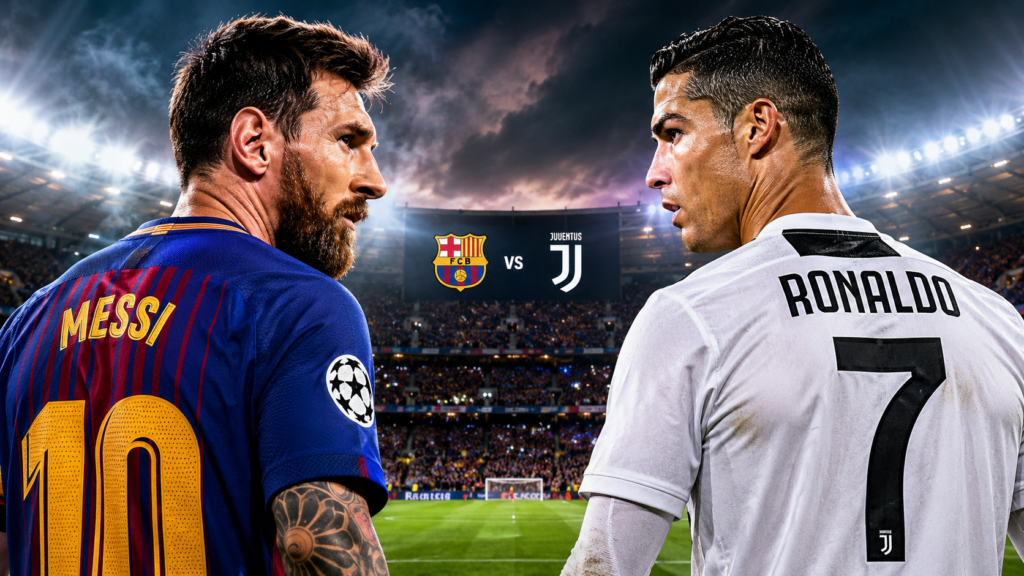
Messi vs Ronaldo at the 2026 World Cup: the reality behind the dream showdown (and what bettors should know)
Put simply: this is the storyline everyone wants. Messi and Ronaldo both making a sixth World Cup appearance — potentially squaring off on the biggest stage one last time — has captured imaginations. But here's the interesting part: the matchup everyone dreams about is more a product of bracket math, current form and market sentiment than fate. This matters because understanding the realistic routes and how sportsbooks price the possibilities can separate sentimental bets from smart ones.
Why a Messi–Ronaldo meeting is plausible — but not a lock
There’s a neat symmetry to it. Both players are in Group-stage draws that place them on the same side of the bracket, which means a clash is possible without either nation needing to redraw. Most analysis — including bracket breakdowns from ESPN and route scenarios mapped by Fox Sports — puts the most likely meeting point in the quarterfinals.
That’s because both Argentina and Portugal would need to win their groups and then survive two knockout rounds to reach that stage. The round of 16 or the final are technically possible meeting points, but they require additional bracket permutations that make them less likely than the quarterfinal route.
This matters because timing shapes bet types. A quarterfinal is early enough to be meaningful for futures and bracket-style prop markets, but late enough that short-term form in the opening games will heavily influence odds.
Where it could happen — and the stadiums that add flavour
If you’re visualizing the scene: Fox Sports has identified Kansas City’s Arrowhead Stadium as a likely quarterfinal site for a potential Messi–Ronaldo clash. That kind of backdrop feeds the narrative — a packed, neutral venue, one last headline-making duel. But venue projections are secondary for bettors compared with bracket placement and matchups.
Remember: the exact location only matters from a ticketing and spectacle perspective. From a betting angle, what matters is which teams they have to beat to get there.
Form, early matches and why Messi currently owns the headlines
If you’ve been following this team, you’ll know Messi’s opener changed the tone. He scored a hat trick for Argentina in their opening game against Algeria and, crucially, reached 16 World Cup goals — tying Miroslav Klose’s tournament record. That performance pushed the “messianic” narrative and tightened markets that pay on Argentina reaching the late knockout rounds.
By contrast, Ronaldo’s Portugal opened with a 1-1 draw against DR Congo. Reports and data-focused writeups flagged a quieter performance — Planet Football noted Ronaldo had just 25 touches and only five touches in the box — and the media response raised questions about whether Portugal are maximizing the window they likely have left with Ronaldo as their talisman.
This matters because sportsbooks react fast to early tournament form. A dominant Messi start and an underwhelming Ronaldo appearance mean futures prices and player-prop odds shift, sometimes more than they should if you’re thinking long term.
Stat snapshot you should keep handy
- Messi: first male player to appear at six World Cups; 16 World Cup goals (tied with Klose); 24 World Cup goal contributions; 119 international goals in 199 caps. Source: ESPN.
- Ronaldo: 8 World Cup goals; 143 international goals in 227 appearances. Source: ESPN.
- Planet Football’s opening-match comparison highlighted Messi’s hat trick and criticized Ronaldo’s quieter game. Source: Planet Football.
Bracket math: Argentina and Portugal’s routes
Practical route matters. ESPN’s bracket analysis places Argentina in Group J, which includes Austria and Jordan, while Portugal are in Group K with Uzbekistan and Colombia. If both win their groups and navigate the usual knockout hazards, a quarterfinal meeting is the most straightforward crossover point.
But football tournaments are full of hazards: surprise group-stage draws, penalty shootouts, VAR incidents, red cards, and one-off form dips. The more knockouts either team has to play to meet, the more opportunities for upsets — that’s especially true for Portugal, where a draw or a tricky second-place finish could force them into the more volatile round-of-16 matchups.
This matters because risk in tournament paths affects probability. A “cleaner” route for Argentina (fewer likely banana peels) supports shorter futures odds on them reaching quarters and beyond compared with Portugal, at least based on the opening projections.
Historical context: what each player is chasing
Let’s not ignore the emotional layer. Messi came into 2026 as the reigning World Cup winner after Argentina’s 2022 triumph and with a more decorated World Cup résumé — 2014 finalist, 2022 winner, most matches and minutes in World Cup history.
Ronaldo’s best World Cup finish remains the 2006 semifinals, and he has never reached a senior international final at a World Cup. Across their careers, Ronaldo leads in total men’s international goals and appearances, while Messi is not far behind and has become the first to six tournaments.
This rivalry is being framed as an epilogue to a two-decade debate. The framing leans toward Messi after 2022, but narratives can flip if Ronaldo sparks a run — so bettors need to keep emotion in check.
Betting angles: where the market is and smart ways to engage
Here are the practical angles bettors are looking at, and why they make sense.
- “Will Messi and Ronaldo meet?” market: The cleanest, simplest prop. The quarterfinal is the market’s most logical target because of bracket placement. If you want to back the reunion outright, think of it as a multi-legged futures play — Argentina win group + win round of 16 AND Portugal win group + win round of 16. Bookmakers price each leg with their own spread, so shop around.
- Futures on nation outcomes: Messi’s strong opener has likely shortened Argentina’s price for reaching quarters/semis; Ronaldo’s quiet start could lengthen Portugal’s. That opens value plays for contrarian bettors: if you think Portugal will settle and Ronaldo will score in later games, early inflated odds could be attractive.
- Player props: “Messi to score anytime in his next match” likely tightened after the hat trick. “Ronaldo to score” markets may be softer after the draw. If you believe the latter was an outlier, look for longer-term accumulation bets (e.g., “Ronaldo anytime in tournament”) rather than one-off match stakes.
- Matchup props for the showdown: If a meeting bet is available, consider correlated markets: “both to score,” “match to go to extra time,” “total goals over/under.” The more legs you add, the harder the bet becomes to win — but correlated outcomes can boost value if your research supports them.
This matters because market inefficiencies show up early. If the public overreacts to one match or another, prices move. Smart bettors look for where that move wasn’t justified by underlying probability.
Odds movements and market psychology
We don’t need to quote exact sportsbook prices to make the point: markets have already reacted to Messi’s hat trick by shortening Argentina-related futures, while the Portugal draw produced softer sentiment around Ronaldo. That movement is natural, but watch for overreactions — sportsbooks love it when the market prices emotion instead of probability.
Example: if Argentina’s price to reach the semis shortens dramatically after one game, but their projected knockout path remains statistically similar, the value might move to Portugal if you think they’ll stabilize.
Practical betting strategies and risk management
First: be realistic about variance. Knockout football is volatile. A bad refereeing decision or a penalty shootout can swing a tournament more than one player’s form.
- Stagger your exposure: If you want to back the meeting, split your stake across correlated markets — e.g., small units on “both group winners meet in quarters” plus a separate, smaller unit on the outright “they meet.”
- Shop lines: Different books will price the reunion and player props differently. A few percentage points here and there matter across futures.
- Use in-play opportunities: If either team stumbles early, in-play lines for comebacks or late goals can offer value, but they also increase risk. Only use in-play if you can act quickly and with discipline.
- Hedging and scale-out: If an early bet hits partial success (for example, Argentina win group), consider hedging future legs to lock profit rather than chasing “all or nothing.”
- Responsible gambling: Only wager what you can afford to lose. Treat the Messi–Ronaldo storyline as entertainment value, not a guaranteed payday. For resources on safe play, consult your local gambling authority and the responsible gambling pages of licensed sportsbooks.
How uncertainty alters the calculus
There are several unknowns that could dramatically shift probabilities: form swings, tactical changes, red cards, injury (none reported currently in the supplied sources), and the single-elimination nature of the knockout rounds.
For instance, a tactical decision to rest Ronaldo in a group match because Portugal has already qualified would change the probability of him scoring early tournament goals and could shift markets. Same goes for Messi; a late-game substitution could reduce his minutes and affect “anytime scorer” props.
This matters because bettors often overestimate the predictability of tournaments. Keep a checklist of variables and update your exposure as they change.
Expert takes and media framing — why narratives matter for markets
ESPN FC panelists have pointed out that Messi appears to add more on the pitch for Argentina than Ronaldo currently adds for Portugal. Planet Football’s opening-match data analysis went further, praising Messi’s explosive start and highlighting Ronaldo’s limited touches.
Those narratives influence public betting behavior. When pundits and data outlets converge on the same take, casual money follows, and sportsbooks adjust. Savvy bettors watch whether early consensus is driven by sustainable factors (like underlying team strength) or by one-off events (a hat trick that may not repeat).
Linking back to authoritative coverage helps you keep the signal: check pieces like the ESPN bracket primer and Fox Sports’ logistical breakdown to ground emotional enthusiasm in facts. See ESPN and Fox Sports for those perspectives.
What to watch next — a checklist for bettors and fans
- Argentina’s remaining group results (vs Austria and Jordan) — clean group finish reduces variance.
- Portugal’s results (vs Uzbekistan and Colombia) — a draw or loss could force a tricky route.
- Minutes and touches: if Ronaldo’s touches in the box climb from the 25-touch mark noted by Planet Football, his market will tighten.
- Market moves: watch futures for Argentina to reach the semis and Portugal to reach the quarters; sudden shifts can indicate where public money is flowing.
- Bracket confirmations and stadium assignments — they’re mostly narrative, but they help with match-prop planning.
FAQ
1. How likely is a Messi vs Ronaldo match at the 2026 World Cup?
It’s plausible but far from certain. The most likely meeting point, according to bracket analysis from outlets like ESPN and Fox Sports, is the quarterfinals if both win their groups and their round-of-16 matches. There are many variables — group upsets, injuries, and single-game volatility — that can derail that path.
2. Which round is most likely for them to meet?
Quarterfinals. That’s the earliest realistic knockout round where tournament bracketing places Argentina and Portugal on a collision course, assuming both follow the expected path through groups and the round of 16.
3. Does Messi’s opening hat trick make an Argentina title run more likely?
It improves perception and likely tightens market prices for Argentina in futures markets. But one game doesn’t guarantee a title run — look at minutes, squad depth, and upcoming opponents. Messi’s hat trick is a useful signal of form, but tournaments are a marathon, not a sprint.
4. Should I bet on “they will meet” as a standalone wager?
Only if you’re comfortable with a multi-leg futures risk. A meeting bet is effectively a compound outcome: both teams must progress through multiple stages. It can pay off handsomely when priced attractively, but treat it as a long-shot parlay with a lower probability than single-match bets.
5. How should Ronaldo’s quiet opener affect my betting?
Use it as information, not the whole thesis. A single underwhelming performance can create value elsewhere — for example, longer odds on Ronaldo to score later in the tournament may be attractive if you believe Portugal will improve tactically. But don’t assume one match proves a trend.
6. Are sportsbooks offering specific “Messi vs Ronaldo” matchup lines?
Some do offer novelty and special-prop markets around such high-profile scenarios, but availability varies by bookmaker and jurisdiction. Check major, regulated sportsbooks for “will they meet” lines and related props. Always compare prices and read terms carefully.
7. What responsible gambling steps should I follow?
Set a budget, stake only what you can afford to lose, and avoid chasing losses. Use staking plans that preserve bankroll (e.g., flat stakes or small percentage of bankroll per bet) and consider setting deposit and loss limits at your sportsbook. If gambling feels out of control, seek help from local support services and the responsible-gambling resources provided by licensed operators.
Conclusion — the right way to think about the fantasy matchup
Messi vs Ronaldo at the 2026 World Cup is a headline that will sell tickets, eyeballs, and bets — and for good reason. We could be witnessing the final chapter of a generational rivalry. But as a bettor or an informed fan, the value comes from separating romance from reality: check the bracket math, monitor form across multiple games, and watch how markets react.
If you only take one practical lesson away: treat the “will they meet” angle as a multi-step probability problem. Shop prices, stagger stakes, and factor in tournament variance. And most importantly, enjoy the spectacle. Whether it ends up being a head-to-head classic in Arrowhead Stadium or a “what if” we talk about over coffee, it’s a rare and thrilling subplot in World Cup history.
For continued reading and up-to-date bracket analysis, see ESPN’s World Cup breakdown, Fox Sports’ route map, and Planet Football’s statistical comparisons: ESPN, Fox Sports, Planet Football, and the ESPN FC panel discussion for context on the tactical conversation: ESPN FC on YouTube.